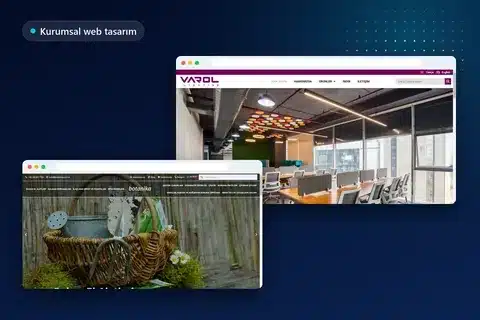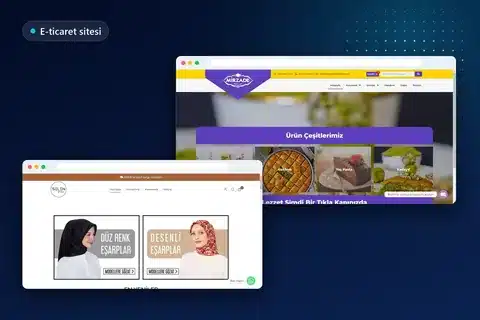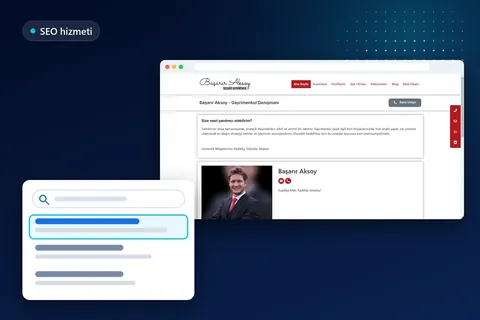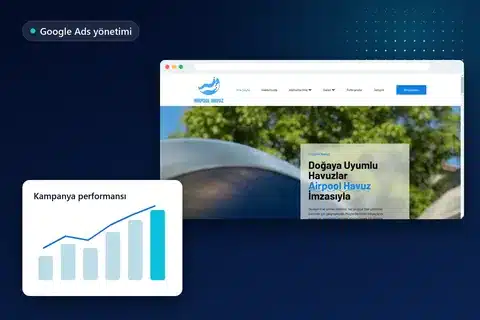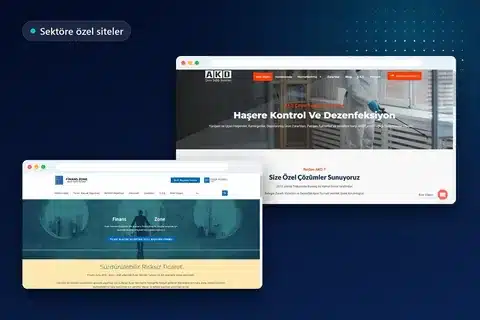
Industry-specific website design means planning a business website around the information customers in that industry look at when deciding, the systems the business uses, and the rules governing promotion, rather than around a generic corporate template. A restaurant’s menu, a real estate office’s listings, or a factory’s product catalog sits at the center of the website; an industry-specific website identifies this center at the outset and arranges the other pages around it.
This page brings together the service pages Onur Freelance has prepared for eighteen industries. Projects are managed from the Maltepe office, working with businesses in Istanbul in person or by video and with businesses in other provinces remotely.
Let’s clarify the industry’s needs with a preliminary assessment
A few lines describing the industry, services offered, and reservation, appointment, or ordering system used are enough for the first step. A free preliminary assessment is carried out, and the proposal is shared the same day.
How does an industry-specific website differ from a general corporate website?
An industry-specific website retains the familiar framework of a corporate website (about us, services, contact), but is built differently in four areas according to the industry’s sales flow:
- Page plan: The industry’s central page becomes the backbone of the website: the menu for a restaurant, room pages for a hotel, listings for real estate, and a product catalog for manufacturing.
- Integration: Systems the business actually uses, such as a booking engine, appointment application, ordering platform, or listing portal, are connected to the website.
- Regulations: Industry rules concerning listings, menus, healthcare promotion, or private education advertising are incorporated into page templates during design.
- Conversion point: A quote form, preliminary enrollment, appointment request, or reservation; the website’s most visible button opens the industry’s actual sales step.
On a general corporate website, attempts are made to address these decisions with plugins after launch. With an industry web design approach, the order is reversed: the industry’s questions and rules are identified first, and the design is built around them.
What does a website focus on in local services, food and beverage, and accommodation?
For businesses in this group, industry-specific website design turns the website into a decision page that quickly takes someone browsing on a phone toward a call, reservation, or quote request.
Restaurants and cafes
The backbone of a restaurant website is the menu page, written as text within the website and opened through the permanent address in the QR code on the table. People wanting a table reservation and those wanting a delivery order are directed to separate channels. Menu formats, ordering links, and branch structure are covered in detail on the restaurant website design page.
Hotels and guesthouses
The job of a hotel website is to complete the reservation through the property’s own channel. The booking engine used by the property is integrated with the website’s appearance; for international guests, each language is published at a separate address and linked using hreflang. Structures by property type and Google hotel results are explained on the hotel website design page.
Beauty salons, hairdressers, and barbers
Because salon customers usually choose the specialist whose work they like, specialist profiles and person-specific appointment links take priority. The service list can be built with full prices, starting prices, or no prices; only work performed at the salon and used with permission goes into the gallery. For appointment application options, see the beauty salon website design page.
Moving and logistics
The main conversion point for a moving company is the survey and quote form; room count, floor and elevator conditions in both buildings, and moving date are collected in the first message. Fixed call and WhatsApp buttons on mobile are used for urgent requests. When area and route pages should be created is discussed on the moving company website design page.
Cleaning companies and pest control
For cleaning companies, each service, such as home and office cleaning, post-construction cleaning, or carpet and upholstery cleaning, is explained on its own page and connected to a short form asking for square meters and room count. Periodic work for apartment buildings, residential complex management companies, and offices is brought together on a separate page. The document area specific to pest control companies appears on the cleaning company website design page.
How are websites structured in real estate, construction, healthcare, education, and manufacturing?
In these industries, decisions take time and more than one person reviews the website; it works like a presentation file that collects meeting requests.
Real estate offices and property consultants
A real estate website has two visitors: the buyer or tenant looking for a listing and the property owner looking for an agent. The listings page is built with separate sale and rental categories and location, price, and room-count filters; a separate submission form is created for property owners. Whether listings should be kept on a portal or on the website is compared on the real estate website design page.
Construction companies and contractors
For construction companies, the website relies on a portfolio presenting completed and ongoing projects in the same format; floor plans, area information, and the sales office appear on each project page. For companies working on tenders and subcontracting, projects listed by work type and scale take priority. Structures by company type are explained on the construction company website design page.
Doctors, dentists, and clinics
Templates for a doctor’s website are prepared according to healthcare promotion regulations from the outset: physician profiles, specialties, working hours, and treatment pages written in a general information style. Appointment requests are taken through a short form, WhatsApp, or an appointment platform, and the form does not request health information. Details appear on the doctor and clinic website design page.
Private schools, preschools, and courses
For private educational institutions, the key step is a short preliminary enrollment form that takes parents toward an introductory meeting. Staff, program, and campus pages form the basis of the decision, while an announcement area keeps the website active after enrollment season ends. State schools are outside this service’s scope; page plans by institution type are explained on the school website design page.
Factories and manufacturing companies
A manufacturer’s website is built around a product catalog without prices and a quote request form opened with a product code. Technical values are entered as text and tables rather than images, and each language is published at a separate address for exports. The choice between a catalog and e-commerce is compared on the factory website design page.

What does a website emphasize in professional services, healthcare, and service industries?
For businesses in this group, industry-specific website design emphasizes objective information permitted by professional rules and the single step customers take at the moment of decision: business details, a specialist profile, vehicle inventory, or a date inquiry, for example. The limits on promotion are often defined by a professional regulation, healthcare legislation, or an industry’s listing rules.
Architecture firms and interior designers
For an architecture firm, the backbone of the website is project pages with credits presenting each project’s location, year, scale, design team, and image credits. Completed buildings, competition proposals, and unbuilt concepts are labeled separately; renderings are not confused with real photographs. Large images are prepared according to screen size. Structures by firm type are explained on the architecture website design page.
Certified public accountants and accounting offices
An accountant’s website is built as an information channel in a profession where regulations restrict promotion that constitutes advertising. Name, professional title, chamber and registration details, and office address appear in the business details; client names, discounts, or promises of free services are not used. For documents, a password-protected client login is connected instead of an open upload form; details appear on the accountant website design page.
Dietitians and nutrition counseling
Because a dietitian is a healthcare professional, the website is prepared under the promotional rules covered by Official Gazette No. 33075: client reviews, fee and campaign information, links to supplement brands, and promises of results are excluded. The appointment form does not ask about weight or illness; online consultations and payment steps are set up through third-party tools. Details appear on the dietitian website design page.
Psychologists, clinical psychologists, and psychological counselors
On a psychologist’s website, the title line is written after checking the diploma; clinical psychologists, psychologists, and psychological counselors are not defined identically in legislation. The appointment request asks only for a name, contact method, and suitable time, the notification email does not carry the message content, and a 112 emergency note appears beside the form. Online sessions and promotional limits are addressed on the psychologist website design page.
Veterinary clinics and pet services
On a veterinary website, the animal owner first checks whether the clinic is open at that hour; emergency and on-call information appears in the top strip of every page and in the fixed call button on phones. Because veterinary announcements cannot constitute advertising, no discount banner or thank-you message section is created, and veterinary medicines are not sold on the website. Pet hotel and grooming sections are explained on the veterinary website design page.
Car dealerships and used vehicle sales
The center of a dealership website is an inventory list filtered by brand, model year, mileage, fuel, and transmission. The 2024 Regulation on the Trade of Motor Land Vehicles requires the authorization certificate number and identification card information in listings, and a sold vehicle’s listing is removed without delay; each vehicle page is built with these fields. Displaying vehicle inspection reports is covered on the car dealership website design page.
Gyms, fitness centers, and Pilates studios
For gym and studio websites, a class schedule opened by day on phones, instructor profiles, and a short trial class form take priority. The form does not ask for health information; if memberships are sold online, the right of withdrawal and preliminary information are shown at the payment step, and no time-based weight-loss promise is written. Class options with limited capacity are addressed on the gym website design page.
Photographers and photography studios
On a photographer’s website, the portfolio is divided into separate galleries by shoot type, and a date inquiry button appears on the first screen. After the shoot, files are delivered through a separate password-protected client gallery. Permission to use images is obtained for people appearing in the portfolio; for children’s shoots, this permission is requested from the parent in writing. Fast image loading is covered on the photographer website design page.
Critical sections and rules considered by industry
In industry-specific website design, the section requiring the greatest care is the one most closely connected to promotional rules; the sources of the rules are provided on the relevant industry page.
| Industry | Critical website section | Rule considered |
|---|---|---|
| Real estate | Listing detail page | Listings include the authorization certificate number and land block and parcel details; sold or rented listings are removed within three days. |
| Restaurants and cafes | Menu and QR code | Additional payments cannot be requested under service, table, or cover charges; a price list is also provided separately to anyone requesting it at a table using a QR code. |
| Hotels and guesthouses | Property presentation and amenities | Promotion matches the name, type, and class on the tourism certificate; star symbols suggesting a different class are not used. |
| Construction | Project page and preliminary inquiry form | Housing promotions that state a price show gross and net area together; the form takes no payment because prepaid sales cannot occur before the building permit. |
| Doctors and clinics | Physician and treatment information pages | Patient-satisfaction-based posts and fee or campaign information are excluded; information pages include the last update date and editor contact details. |
| Beauty salons | Service list | Medical procedures performed with lasers or IPL cannot be carried out or promoted in salons; expressions suggesting a medical beauty center are not used. |
| Private schools and courses | Gallery and promotional images | Student pictures, names, and achievement information cannot be used in advertisements and announcements; the institution’s QR code appears in promotional material. |
| Moving companies | Area and route pages | Pages duplicated by changing city names are doorway page examples under Google’s spam policies; authorization certificate details are provided to build trust. |
| Factories and manufacturing | Products and quality certificates page | The CE mark and TSE logo are shown only if the company actually holds the certification and only for products covered by it. |
| Cleaning and pest control | Quote form and document area | For expressions such as “guarantee,” scope and conditions are stated in the same place; pest control permit information is added if the document is current. |
| Architecture | Project page and credits | Professional rules prohibit advertising with false claims and claiming another person’s work; written usage permission is obtained for photographs and renderings. |
| Accountants | Business details and contact page | Promotion that could constitute advertising to obtain work is prohibited; chamber and registration details appear on the website, client names are not used as references, and the chamber is informed when the website is established. |
| Dietitians | Counseling and informational articles | Healthcare promotion rules apply: promotional satisfaction posts and fee or campaign information are excluded; certificates are not presented as specialist titles, and product or brand links are not provided. |
| Psychologists | Title line and appointment form | Clinical psychologists are subject to healthcare promotion rules; client reviews and session fees are not published, and mental health information is not requested in the form because it is special-category data. |
| Veterinarians | Emergency hours and physician profiles | Announcements cannot constitute advertising, and client thank-you announcements cannot be published; titles not properly acquired are not used, and veterinary medicinal products cannot be sold online. |
| Car dealerships | Vehicle detail page | The authorization certificate number, business name on the certificate, and identification card information are kept current in the listing; the listing for a sold vehicle is ended without delay. |
| Gyms | Membership packages and payment step | For memberships sold online, the right of withdrawal and its exception are disclosed before payment; the gym bears the burden of proving advertising claims. |
| Photographers | Portfolio and client gallery | A portrait cannot be published without the depicted person’s permission; usage rights granted to the client are individually listed in a written contract. |
The table is a general summary of provisions read from official texts, professional chamber rules, and Google guidelines on the industry pages; in cases of uncertainty, the opinion of legal counsel or the relevant professional chamber is taken as the basis.
Let’s define the page plan for your industry together
When the industry, the website’s main conversion point, and systems to be connected are discussed, the page list and scope are put in writing. For work including additional modules, the price is calculated from this written list.
How is a website planned if the industry is not listed?
For an industry not listed, the website is planned using the same method on the framework of the corporate web design service: customers’ questions at the moment of decision, software used by the business, and any industry promotional rules are identified, then the page forming the website’s backbone is selected. Industry-specific web design follows this sequence for businesses such as auto repair shops, printing companies, florists, and wedding venues too.
During preliminary preparation, the website brief form is useful. The form collects information about the business, website purpose, target audience, desired pages, and integrations in six short steps, and the resulting summary can be sent through WhatsApp.
How is the price of an industry-specific website determined?
The price is determined by the website’s structure rather than the industry’s name; industry-specific website design is also built on one of the fixed packages:
- Single-page website: From 12,000 TL; small businesses providing one service or landing pages for advertising.
- Corporate website: From 15,000 TL; structures with service, team, portfolio, or catalog pages.
- E-commerce package: From 24,000 TL; if orders and payments will be taken within the website.
- Monthly maintenance (optional): 500 – 2,000 TL; updates, backups, and security checks.
The cost of industry-specific additions such as booking integration, a listing module, an appointment link, a price calculator, or multiple languages is determined in the proposal after reviewing the scope. Fees for third-party systems (booking engine, ordering platform, listing portal) are paid directly to that service. A package comparison appears on the web design prices page.
What are the steps in preparing an industry website?
The work begins by learning the industry’s sales flow; no website is launched before its conversion point is tested. The sequence is the same in every industry:
- Introductory meeting: The industry, services, systems used, and target customers are discussed; with a free preliminary assessment, the proposal is prepared the same day.
- Documents and content: License or authorization certificate information, photographs, and service and product information are requested in a single list.
- Page plan: The backbone page, form fields, and templates incorporating the rules are approved.
- Design and setup: Design starts with the phone screen; WordPress is installed, and integrations and forms are connected.
- Technical SEO settings: Titles and descriptions are prepared, and the sitemap is submitted to Search Console.
- Testing and handover: The reservation, appointment, or quote flow is tested on different phones; dashboard training is provided after launch.
For a corporate website with content delivered, no integrations, and one language, the average timeframe is 5-7 business days; if additional modules are included, the schedule is determined together with the scope. The domain and hosting account are registered in the business’s own name.
Common mistakes in industry web design and the correct method
A frequently chosen alternative to industry-specific website design is to buy a ready-made theme sold under an industry name and replace its demo content with the business’s logo and phone number. Review sliders, price banners, or star icons left from the demo can conflict with industry rules. For a website planned around the industry, rules and the conversion flow are identified first, and the design is prepared within those limits.
The second mistake is duplicating the same text by changing the industry or city name. Google’s guide to creating helpful, reliable content states that its systems prioritize information created to benefit users rather than influence rankings, and asks whether content drawing on other sources adds value. Each industry page is therefore written separately around its own questions.
The third mistake is considering the booking, appointment, or ordering system after design is complete; a component added later becomes disconnected from the website’s appearance. Work across different industries can be viewed on the references page; every project has a written scope, and no promises are made about rankings or sales.
Let’s build the right website for the business’s industry
Information is provided to those with questions, existing websites of businesses at the decision stage are reviewed against industry criteria, and proposals are sent the same day to those wanting to start.
The industry information provides general guidance and is not a legal opinion.
Why a business needs its own website regardless of industry is explained in the why a corporate website matters guide.
Page structures and technical requirements shared by all industries appear in the what a corporate website should be like checklist.
For publishing organizations, the topic is also addressed on the starting a news website page, alongside business details, responsible editor, and archive obligations.
Related guides
Frequently asked questions
How much does an industry-specific website cost?
Industry-specific websites are also built on fixed packages; starting prices are 12,000 TL for a single page, 15,000 TL for a corporate structure, and 24,000 TL for a structure with a cart and payment. Prices for industry-specific additions such as reservations, a listing module, an appointment link, or multiple languages are clarified in the proposal according to scope.
What is the difference between an industry-specific website and a ready-made industry theme?
A ready-made theme comes with demo content and does not know the systems the business uses, industry rules, or the actual conversion step. On an industry-specific website, these three are identified first, and the page plan and design are built accordingly.
For which industries are tailored page plans prepared?
Separate page plans and service pages are available for 18 industries: real estate, restaurants and cafes, hotels, construction, doctors and clinics, beauty salons, schools, moving, factories, cleaning companies, architecture, accountants, dietitians, psychologists, veterinarians, car dealerships, gyms, and photographers. Industries not listed are planned using the same method on the corporate web design framework.
Can I have an industry-specific website built if my industry is not listed?
Yes; customers’ questions at the moment of decision, the software used, and any industry promotional rules are identified during the initial meeting. For preparation, the website brief form can be completed and its summary sent through WhatsApp.
Can a booking, appointment, or ordering system be connected to the website?
Yes, the booking engine, appointment application, or ordering platform used by the business is connected to the website using the provider’s method. The integration scope is clarified in the proposal; the third-party service fee is paid directly to that service.
How are industry rules applied on the website?
Rules are incorporated into page templates during design; for example, a real estate listing template has an authorization certificate field, and a clinic information page has an update date field. Where necessary, legal counsel’s opinion is obtained to check whether the texts are appropriate for the business.
How many days does it take for an industry-specific website to go live?
For a corporate website with texts and images delivered and without integrations or a second language, the average timeframe is 5-7 business days. For projects including booking, a listing module, or a language version, the schedule is determined together once the scope is known.
Can the same website suit a business serving more than one industry?
Yes; each business line has its own path in the menu and its own conversion point. For example, for a construction company both selling housing and undertaking tender work, buyers and project owners are served through different sections.

Call us
Call us for detailed information.
Let us call you!
Share your phone number and let us call you!