At a glance: Corporate web design means building a mobile-friendly, search-ready website that presents a business, its services, and contact details in one reliable place. At Onur Freelance, corporate websites start at 15,000 TL; when content is ready, a standard site is delivered in an average of 5–7 business days. The domain and hosting are registered in the business’s name, and admin panel training is provided at handover. Use the price calculator to see a package based on the number of pages and languages you need.
Corporate websites start at 15,000 TL; with text and images ready, they go live in an average of 5–7 business days.
★ 5.0 · 217 Google reviews · same-day quote · case studies
Corporate web design presents who a business is, what services it provides, and how to contact it through a multipage site consistent with its brand identity. A well-planned corporate website is the first place a customer seeking a quote, a buyer looking for a supplier, or a prospective job applicant checks. The pages it contains, its loading speed, and the completeness of its legal notices shape that first impression just as much as its appearance.
This guide covers every part of corporate website design in order: essential pages, package and price comparisons, the 5–7 business day process, content preparation, brand consistency, SEO foundations, speed and accessibility, KVKK (Turkey’s Personal Data Protection Law) requirements, and example structures by industry. Based in Maltepe (Gülsuyu), Istanbul, Onur Freelance builds corporate websites through in-person or online collaboration throughout Istanbul and remotely for businesses elsewhere in Turkey and abroad.
Let’s plan your corporate website in a short consultation
Share your industry, required pages, and existing logo, if available, on WhatsApp. We define the scope and share a quote the same day. Consultations can take place in person in Istanbul or online.
Corporate web design at Onur Freelance: quick facts
- Team: Founder Onur Ertem (over 8 years of experience in web design and digital marketing) and two digital marketing specialists. There is no intermediary account representative; you speak with the team doing the work. Decisions and revisions are discussed directly with the design team.
- Location: Maltepe (Gülsuyu), Istanbul. We meet Istanbul businesses in person by appointment and work online with clients in other cities and abroad.
- Price: Corporate websites start at 15,000 TL, one-page websites at 12,000 TL, and e-commerce websites at 24,000 TL.
- Timeline: With content ready, a standard corporate site is delivered in an average of 5–7 business days.
- At handover: Mobile compatibility, SEO foundations, SSL, and WordPress admin panel training. The domain and hosting are registered in the business’s name.
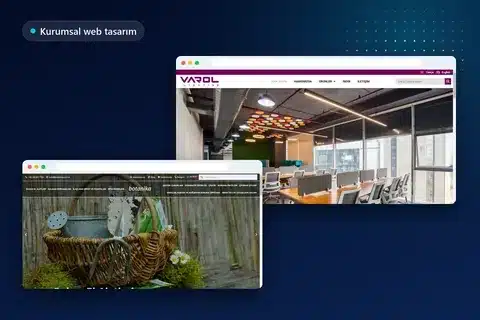
- Project examples: Macrolif (concrete fiber manufacturer), Aeroscent (commercial scenting), Varol Lighting (LED lighting, bilingual), Favorit Nakliyat, Kaplan Kebap. See the full list on the client projects page.
- Case studies: a scrap metal company’s nonfunctional old site migrated to WordPress while preserving its design and other case studies.
- Google reviews: A 5.0 rating on Google Business Profile, with 217 reviews.
What is corporate web design, and what does it offer a business?
A corporate website presents a business’s services, background, and contact channels in an organized, trustworthy format. Sales do not take place directly on the site; the aim is to inform visitors, build trust, and encourage them to get in touch by phone, WhatsApp, or a form.
It differs from an e-commerce site by focusing on reputation and inquiries rather than product sales. When a product catalog, shopping cart, and online payments are needed, the structure changes; these requirements are planned separately as part of e-commerce website development . Unlike a one-page promotional site, each service has its own page that can be found individually in search engines.
Social media accounts and map listings make a business visible, but the platform controls the content and layout. A corporate website published on its own domain belongs to the business: the business decides how information is presented, which services receive emphasis, and where visitors are directed.
Essential corporate website pages: a checklist
A standard corporate site’s core consists of a homepage, about page, service pages, contact page, and legal notices. Pages such as projects, a blog, and careers are added according to the industry and available content. The basic page-planning checklist is as follows:
- Homepage: A headline explaining the business on the first screen, featured services, trust signals, and a visible contact button.
- About: The founding story, working approach, founder or team information, and any relevant documents.
- Service pages: A separate page for each main service, covering scope, process, frequently asked questions, and a contact prompt.
- Client projects or portfolio: Only real work approved for publication, with images and short descriptions.
- Contact: Address, phone, WhatsApp, email, business hours, map, and contact form.
- Frequently asked questions: Short, clear answers to the questions most often asked before purchase.
- Blog or news: Add this if content will be produced regularly; otherwise, do not publish an empty blog page.
- Legal notices: A KVKK privacy notice, cookie policy, and, where needed, privacy policy and terms of use.
- Careers: Application information if the team is growing; because an application form collects personal data, it links to its own privacy notice.
More pages may seem to make a website stronger, but a page without meaningful content adds value for neither visitors nor search engines. The right approach is to publish pages supported by content you can prepare and leave the rest for a later stage.
Corporate website packages and prices (2026)
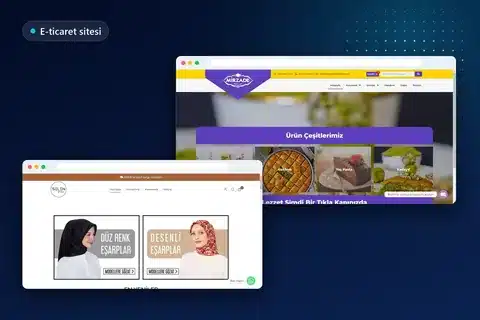
Corporate website packages start at 15,000 TL; using the same foundation, one-page sites start at 12,000 TL and e-commerce sites at 24,000 TL. The table below compares the three packages by need:
| Package | Starting price | Suitable for |
|---|---|---|
| One-page website | From 12,000 TL | Promoting one service or campaign; all information on a single scrolling page |
| Corporate website | From 15,000 TL | A multipage structure with several services, about, client projects, and contact pages |
| E-commerce website | From 24,000 TL | Product catalog, shopping cart, and online payments; built on WooCommerce |
| Monthly maintenance (optional) | 500 – 2,000 TL / month | Post-launch updates, backup monitoring, and minor edits, depending on scope |
All three packages share the same handover standard: mobile-friendly sites with SEO foundations and SSL, admin panel training, and domain and hosting registration in the business’s name. The main factors raising the price above the starting amount are page count, multiple languages, custom forms such as quote or appointment requests, integrations, and whether content is ready. A detailed comparison of all packages is available on the web design prices page.
Package selection depends on the number of services and the sales model. A one-page site may be sufficient for a business offering one service and wanting to launch quickly; the corporate package suits businesses with several services that need each one to be found separately. Online sales require an e-commerce structure; a site that starts with one page can later expand into a multipage structure, with scope reassessed at that stage.
Maintenance is optional; the business can manage the site itself after handover. If regular updates and backup monitoring are needed, monthly maintenance scope is explained on the annual WordPress maintenance and updates page.
Corporate website project reviews
Corporate website needs vary by industry: a manufacturer needs technical documents, a service business needs an inquiry form, and a restaurant needs separate ordering and reservation lines. Completed projects from different industries:
- Macrolif: product-specific technical pages, certificate and e-catalog downloads, and an inquiry form on every page for a concrete fiber reinforcement manufacturer.
- Aeroscent: a free demo form, fragrance list, and equipment page for a commercial scenting service.
- Varol Lighting: a bilingual structure with hreflang tags and a technical product catalog for an LED lighting manufacturer.
- Favorit Nakliyat: service pages, district-specific moving pages, a gallery, and phone and WhatsApp links in the top bar.
- Kaplan Kebap: separate ordering and reservation lines for restaurant and catering services, a catering inquiry form, and a gallery.
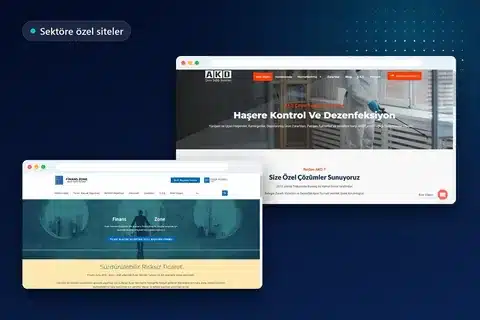
- Yalın Dönüşüm website – lean manufacturing consulting
- Finans Zone website – commercial insurance agency
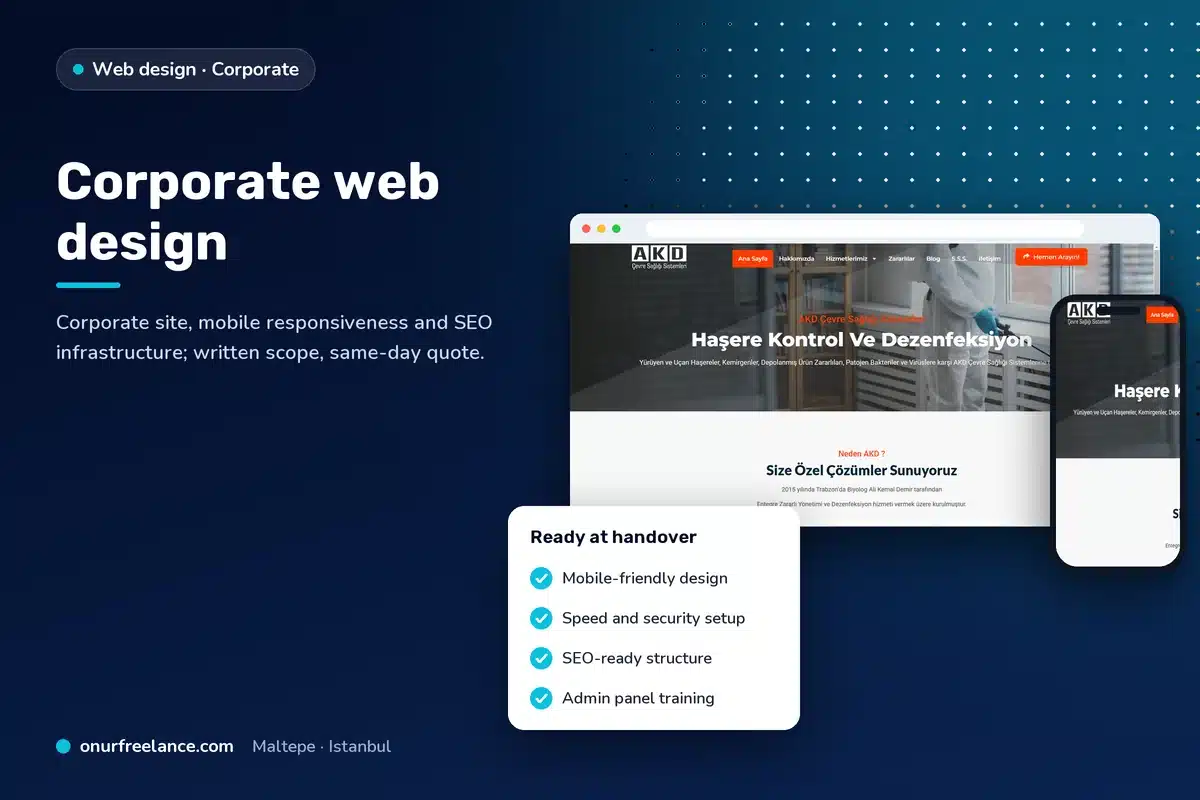
- AKD İlaçlama website – pest control
- Bülbül Isı website – boiler and air conditioning services
The full client list is on the client projects page.
Our pages tailored to local industries across Istanbul’s 39 districts are collected in the Istanbul web design guide .
The corporate website design process: step by step in 5–7 business days
When content is ready, a standard corporate site goes live in an average of 5–7 business days. The process follows this order, with approval at every stage:
- Requirements consultation: We discuss the industry, target customers, services, and example sites you like; a quote is shared the same day.
- Setup: The domain and hosting are registered in the business’s name or existing accounts are used; WordPress installation and SSL setup are completed.
- Page planning: We map out the menu and each page’s sections, clarifying where content will go.
- Design and layout: The homepage and inner pages are prepared using brand colors, typography, and the logo, and content is added.
- Technical checks: We check the mobile layout, form submissions, page speed, title and description tags, and sitemap.
- Revisions and approval: Revision requests are collected together, implemented, and submitted for final approval.
- Launch and admin panel training: The site goes live; we demonstrate how to update text, images, and pages through the admin panel.
The main factor determining the schedule is when content becomes ready. Additions such as multiple languages, appointment systems, or custom integrations also extend the timeline according to scope; in these cases, the schedule is specified separately in the quote.
Content preparation: what to gather before starting
Completing corporate web design quickly depends on having text and images ready from the start. Because the design develops alongside the content, using placeholder text can disrupt the layout when the real content arrives. Gather the following before starting:
- Logo file (preferably vector: SVG, AI, or PDF) and brand color codes, if available
- About text: founding, area of expertise, and service area
- A short description and scope details for each service
- Real photos: team, office, production facilities, products, or work in practice
- Client and project information approved for publication
- Address, phone, WhatsApp, email, business hours, and social media accounts
- Documents, certificates, and catalog files, if available
- Information on which personal data the business processes and why, for the privacy notice and cookie policy
Authentic photos are particularly important; using stock images only as supporting material helps maintain credibility. If texts have not yet been written, even a few points about each service are enough to start page planning.
Let’s plan your pages together
Share your service list and available content to clarify the pages needed, missing materials, and timeline in one consultation.
Brand identity and logo consistency
During corporate web design, the site should reflect the same colors, typography, and logo style the business uses everywhere from business cards to signage. A different color tone or a distorted, low-resolution logo on the website can make visitors feel they are looking at two different companies.
For brand consistency, we obtain the logo in vector format, colors as HEX codes, and the brand typeface name. These elements are set up as a single site-wide style definition, so a later color change applies to every page at once.
Horizontal and square logo versions for mobile screens and a simple site icon (favicon) for the browser tab also support brand consistency. For businesses without brand guidelines, at least a primary color, secondary color, and single font family are defined at the start.
SEO foundations: helping a corporate website appear on Google
SEO foundations are technical and structural settings made during setup so search engines can crawl and understand the site correctly. They are considered alongside page planning, rather than added later. Every corporate web design project includes the following at handover:
- A unique title and meta description for each page
- One H1 per page and a logical H2–H3 heading hierarchy
- Short, readable URLs that describe the page’s subject
- An XML sitemap
- Descriptive alternative text and compression for images
- Relevant internal links between service pages
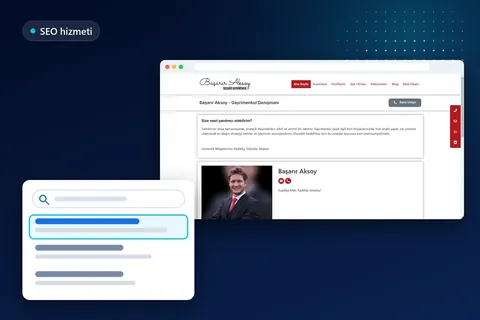
Google’s SEO starter guidestates that Google Search does not use the keywords meta tag and that changes can take anywhere from a few hours to several months to appear in results. The foundations help pages get discovered; rankings depend on content quality, competition, and time and cannot be guaranteed. The SEO steps taken during setup are explained in detail on the SEO-friendly web design page.
Speed and accessibility: Core Web Vitals and WCAG
In corporate web design, a fast, accessible site lets visitors reach content smoothly regardless of device, connection, or disability. Both topics rely on published criteria rather than guesswork.
Measuring speed with Core Web Vitals
According to Google’s Core Web Vitals explanation on web.dev, a good user experience aims for the largest content element (LCP) to load within 2.5 seconds, interaction response time (INP) of 200 milliseconds or less, and visual layout shifts (CLS) of 0.1 or less. These thresholds are evaluated separately for mobile and desktop at the 75th percentile of page loads.
Common causes of slow corporate sites include oversized slider images, unnecessary plugins, and too many font files. Images are converted to modern formats such as WebP, those below the fold are lazy-loaded, and only necessary plugins are installed. PageSpeed Insights and the Core Web Vitals report in Search Console are used for measurement; lab scores and real user data may differ.
Accessibility with WCAG
According to W3C’s WCAG 2 overview , WCAG 2.2 contains 13 guidelines organized under four principles—perceivable, operable, understandable, and robust—with success criteria at A, AA, and AAA levels. In practice, this means adequate contrast between text and background, meaningful image alternative text, keyboard-accessible menus, labeled form fields, and error messages that do not rely on color alone.
KVKK, cookie notices, and privacy notice requirements
Every corporate site collecting personal data through forms, cookies, or analytics tools must fulfill its obligation to inform under Personal Data Protection Law No. 6698. According to the Turkish Personal Data Protection Authority’s explanation of the obligation to inform , when collecting data, the controller must disclose its identity, the purposes of processing, to whom and for what purposes data may be transferred, the collection method and legal basis, and the data subject’s rights.
The Authority’s cookie guidance distinguishes cookies strictly necessary for the site to function from those requiring explicit consent, such as behavioral advertising cookies. According to the guidance, explicit consent must be obtained through active user approval (opt-in); continued use of the site must not count as consent. Presenting equally visible Accept, Reject, and Preferences options on the first screen is given as an example of good practice. The technical implementation of these requirements on a corporate site includes:
- KVKK privacy notice and cookie policy pages accessible from the footer
- A cookie management panel that blocks nonessential cookies until consent is given
- Links to the privacy notice in forms and only genuinely necessary data fields
- Presenting privacy information and explicit consent approval separately
The notices must reflect the business’s own data processing practices; copying text from another site does not reflect its actual situation. The web design team builds the pages, panel, and form structure; legal advice is recommended where needed to ensure the texts are legally appropriate.
Corporate website structures by industry: manufacturing, services, and restaurants
Although the basic corporate site structure is similar across industries, the prominent pages and applicable rules differ. Three common examples are outlined below; completed work from different industries can be viewed on the client projects page.
| Industry | Key pages | Points to consider |
|---|---|---|
| Industry and manufacturing | Product groups, production capabilities, quality certificates, catalog, quote form | Multiple languages if targeting international buyers; technical data should not be limited to PDFs |
| Service businesses (moving, pest control, technical services) | Service pages, service areas, quote form, gallery | Phone and WhatsApp should be one tap away on every screen; area pages should not duplicate each other |
| Restaurants and catering | Menu, ordering and reservations, catering inquiry form, gallery | The menu should be available as text as well as images; ordering and reservation lines should be separate |
Industrial and manufacturing businesses
Industrial websites often target purchasing departments, dealers, and international buyers; product groups, production capabilities, and certificates are decision criteria for these audiences. Keeping technical specifications only in a PDF catalog makes them harder for search engines and mobile users to access. Key information also appears in page text, and language options are included in the page plan from the start.
Service businesses
For businesses such as moving companies, pest control providers, or boiler and air conditioning services, most visitors arrive on their phones with an urgent need. Service pages, service areas, and one-tap phone or WhatsApp links are key decision points. Area pages are prepared with real information about services in each district rather than copying the same text for every district.
Restaurants and catering
Menus, orders, and reservations are three separate needs on restaurant sites; combining them in one form mixes up requests. Providing menus as text as well as images improves both mobile readability and search visibility. A separate form for corporate requests such as catering collects guest numbers and dates from the outset.
Common corporate website development mistakes
Most corporate website mistakes arise from inadequate planning rather than design. Key mistakes to check before launch and the appropriate approaches are:
- Launching with demo content: Sample text and images from a ready-made theme are left on the site. Every page should instead undergo an individual text check before publication.
- Squeezing every service onto one page: Each service is searched for separately and needs its own page, title, and description.
- Putting contact details only on the contact page: Phone and WhatsApp should be accessible with one tap from every page on mobile.
- Registering the domain in the designer’s name: If the domain and hosting are not registered in the business’s name, access and migration problems can arise later.
- Skipping legal notices: Using forms or analytics without a privacy notice and cookie panel creates KVKK risks.
- Opening with a heavy slider or video: This slows the first screen and increases mobile LCP time.
- Failing to update after launch: Outdated plugins and themes can introduce security vulnerabilities, while outdated information undermines trust.
Freelancer or agency? Comparing working models for a corporate website
Agencies offer an advantage for long-term projects involving many stakeholders through teams of designers, developers, and project managers, although communication often goes through a project manager in layers. With freelance work, the same small team listens to the request, creates the design, and launches the site; this shortens decision and revision cycles and simplifies corporate web design projects with a standard scope. The main criteria are project size and whether the business prefers a single contact or a team; both models require the domain to be registered in the business’s name, the deliverables to be defined in writing, and maintenance terms to be discussed upfront.
Let’s take the first step toward your corporate website today
Use the same number for a brief page-plan review if you are still researching, a scope comparison if you are deciding between packages, or a same-day quote if you are ready to start. Business hours are 09:00–21:00.
Related guides
- Why does a corporate website matter? A 2026 guide
- When should a corporate website be redesigned?
- Ready-made theme or custom design?
- Professional website development
- Healthcare websites: legal limits, KVKK, and content rules
- Industry-specific website design: restaurants, real estate, clinics, factories, and more
- Corporate web design in Pendik
- Web design for industrial businesses in Ümraniye
What our clients say
From Google reviews by businesses that commissioned corporate websites.
“From start to finish, he analyzed our requests very accurately, offered excellent solutions, and delivered the work right on time.”
B. K. · Google review
“By analyzing our needs accurately, they created a modern, user-friendly website that reflects our corporate identity.”
H. R. · Google review
“The website he created presents our company better visually. We thank him very much.”
Y. A. · Google review
Reviews are taken from Google Business Profile; reviewers are identified by their initials.
See all reviews on Google →Frequently asked questions
How much does corporate web design cost in 2026?
Corporate website packages start at 15,000 TL. One-page sites start at 12,000 TL and e-commerce sites at 24,000 TL; the final price depends on page count, language options, and custom forms, with a quote shared the same day.
How long does a corporate website take to build?
When content is ready, a standard corporate site goes live in an average of 5–7 business days. Additions such as multiple languages, appointment systems, or custom integrations extend the timeline according to scope.
Which pages should a corporate website include?
The core structure includes a homepage, about page, service pages, contact page, and legal notices such as a KVKK privacy notice and cookie policy. Client projects, frequently asked questions, blog, and careers pages are added according to the industry and available content.
Whose name are the domain and hosting registered in?
The domain and hosting are registered in the business’s name. This keeps website ownership and access credentials with the business, avoiding problems if a provider change or migration is needed later.
Can I update content myself after the site launches?
Yes. Admin panel training is provided at handover; text, images, and pages can be updated through the panel. Optional maintenance is available for 500 – 2,000 TL per month if regular updates and backup monitoring are needed.
Are KVKK notices required for a corporate website?
Sites collecting personal data through forms, cookies, or analytics must fulfill the obligation to inform under Law No. 6698. According to the KVKK cookie guidance, nonessential cookies require active user consent; notices are prepared around the business’s own data processing practices.
Does corporate web design include SEO work?
SEO foundations are included: page titles and descriptions, heading hierarchy, sitemap, and speed settings are configured during setup. Ongoing SEO work such as regular content production and ranking monitoring is a separate service, quoted after scope review, with no ranking guarantee.
Can a corporate website be built without a logo?
Yes, but completing the logo first is recommended because the logo and brand colors define the site’s visual style. Logo design is not offered; the site is built using the business’s existing logo and brand colors.