Factory website design means structuring a manufacturer’s product range, technical data, production infrastructure and quotation process so a purchasing specialist, project office or overseas distributor can assess them in a single session. A good factory website works like a sales representative answering questions in advance rather than a storefront: it helps users find product codes, download technical sheets, submit quotation requests with the right information and read in the buyer’s language in export markets.
Drawing on Onur Freelance’s work for machinery, lighting and furniture manufacturers, this page explains page planning, catalog structure, quotation forms, multilingual content, document display rules and pricing. Work is managed from Maltepe, Istanbul; meetings with companies in Istanbul take place face to face or online, while manufacturers outside the city and abroad are served remotely.
Let us clarify your product range and target market through a preliminary assessment
When the current PDF catalog, product count and countries served are shared in a short message, a free preliminary assessment is performed and a proposal is provided the same day. If a website is already live, its address can also be added to the message.
Which pages does factory website design include?
A manufacturing company website has five main parts: company presentation, product catalog, technical documents, quotation process and contact information. Not every factory needs the same pages, but the information corporate buyers examine when assessing suppliers is similar across most industries. The basic page plan is:
- Homepage: What is manufactured, which industries are served and the quotation button appear on the first screen.
- Product groups and product pages: A category tree, technical data table, images and a downloadable sheet.
- Company pages: Company introduction, production and quality policy, and a facility page if applicable.
- Documents and download center: PDF catalog, technical sheets and certificates the company actually holds.
- Request for quotation form: A form on a separate page with product code and quantity fields.
- Dealers, exports and contact: Dealer applications, a separate export contact channel, address and map.
The website is built on WordPress; company staff can add new products, catalogs or trade show announcements through the panel. Domain and hosting are registered in the company’s name, and panel training is provided.
What does a B2B buyer look for on a manufacturer’s website?
On a manufacturer’s website, B2B buyers first check whether the product technically meets their requirements, then whether the company is a reliable supplier. Since prices often vary by capacity, options and quantity, they are discussed at the quotation stage; the website’s job is to provide complete information enabling buyers to ask the right questions.
The decision usually belongs to more than one person. The purchasing specialist forwards the technical sheet to an engineer, the engineer checks dimensions and standards, and a manager reviews the supplier’s company information. Easily shareable product page addresses, one-click PDF downloads and company pages readily found in the menu help everyone in this chain. The same information must be readable without zooming for buyers checking their phones at a trade show stand.
A catalog without prices or e-commerce?
For products whose prices vary by capacity, options or order quantity, the website is built as a catalog without prices; an e-commerce structure can be considered for standard, stocked products suitable for shipping. Both structures can be built with WooCommerce; the difference is whether cart and payment steps are enabled.
| Criterion | Catalog without prices | E-commerce |
|---|---|---|
| Suitable product type | Machines, production lines, project-based and custom-sized products | Standard, stocked, shippable products and spare parts |
| Conversion objective | Quotation requests, callbacks, technical sheet downloads | Orders and online payment |
| Page focus | Technical data, operating principles, variant codes | Prices, stock, shipping and return conditions |
| Additional obligation | Privacy notice on the quotation form | Distance sales, payment and return policies |
| Starting package | Corporate website, from 15,000 TL | E-commerce website, from 24,000 TL |
A mixed structure is also possible in factory website design: main products are sold through quotations, while consumables and spare parts use a cart. The texts manufacturers moving to e-commerce must include are also covered on the e-commerce website development page.
Product pages, technical sheets and product filters
The product page is the most decision-influencing page of a manufacturing website and should present technical data as text or tables rather than images. Values entered as text are readable by search engines, can be copied into quotation documents and are legible on mobile devices without zooming.
Technical data and variant codes
Values such as power, dimensions, capacity, material, applicable standards and mounting method are given in the same order and units for every product. Different sizes of the same model appear in a table with separate product codes; quotation requests usually arrive using these codes. Identical product codes in the printed catalog, trade show brochure and website allow buyers moving from catalog to website to find products by entering the code in the search box.
Downloading technical sheets and PDF catalogs
Users preparing project and tender documents seek downloadable files. The general catalog and product-specific technical sheets are collected in their current versions on a single download page, with the relevant sheet also linked from the product page. Information in PDFs must also be available as HTML text on the website; information available only inside a PDF is harder to find in searches.
Filters and code search
Catalogs containing hundreds of products use filters based on technical characteristics such as application, dimension range, material or protection class. A search box suggesting results as users type takes buyers searching by product code directly to the product. Every filter combination is not opened for indexing as a separate page; category pages to be indexed are determined during setup.
How is a request for quotation (RFQ) form built?
A request for quotation form lets buyers provide product codes, quantities and delivery information in one submission without requiring the sales team to ask additional questions before responding. The better the form is structured, the shorter the first exchange becomes. Setup proceeds in this order:
- Field list: Company name, contact person, country, product code, quantity, requested delivery terms and a description field are defined.
- From product to form: The Request a quote button on the product page opens the form with the relevant product code filled in.
- File attachment: A file field allows technical drawings or specifications to be uploaded; permitted file types are restricted.
- Routing: Domestic inquiries go to the sales team, while overseas inquiries go to the export email address.
- Short alternative: A callback form asking only for a name and telephone number is also added for buyers using a phone in the field.
- Measurement and testing: Submitted requests are tracked as conversions in Analytics, and the form is tested on different devices.
Below the form is a link to a privacy notice explaining how personal data will be processed; consent for newsletters or promotional messages is obtained through a checkbox separate from the quotation request.
Let us define the catalog and quotation process scope together
When product count, variant structure, downloadable document list and language versions are shared, the project scope is documented. Multilingual and extensive catalogs are priced based on this scope.

Production facility and quality certificate pages
In factory website design, facility and quality pages are examined by corporate buyers assessing suppliers and are prepared only with verifiable information. Figures such as enclosed floor area, machinery inventory, production capacity or employee count use current information provided by the company; estimated or rounded figures become the first data questioned in quotation discussions.
Production processes and quality control steps are explained using real photographs and short videos taken at the facility; stock images contradict what visitors see on site. The quality certificates page states each certificate’s name, issuing body, scope and validity date; expired or suspended certificates are removed.
CE marking, the TSE mark and KVKK (Turkey’s Personal Data Protection Law): Rules to follow on the website
A factory website displays CE marking, the TSE mark or system certificate logos only if the company actually holds the certificate or marking and only for products covered by it. Every form collecting personal data is also subject to privacy notice obligations, while commercial electronic messages are subject to consent and opt-out rules.
CE marking
The CE Marking Regulation (Official Gazette, May 27, 2021, No. 31493) provides in Article 10 that CE marking may be used only on products for which technical regulations require it, and that no other marks or descriptions misleading third parties about the marking’s meaning and form may be included. Under the same article, affixing the mark means the manufacturer declares responsibility for the product’s conformity with the relevant technical regulation. On the website, CE wording is therefore limited to pages for products actually bearing the mark; a decorative CE badge covering all products is not used.
The TSE mark and system certificate logos
TSE’s Certificate, Logo and Trademark Usage Procedure (TSE-PR-010) states that authorized organizations may use TSE certificates, logos and marks only within their certificates or contracts, and that use must stop if the certificate is suspended or terminated. Article 5.3.2 explicitly prohibits use creating the impression that products outside the certificate scope are certified, including on websites, promotional materials and advertisements. The same procedure also states that the TSE management system certification logo cannot be used on products but may be used in advertising and promotional brochures.
KVKK privacy notices and commercial electronic messages
Article 10 of Law No. 6698 requires a company collecting personal data through forms to disclose the data controller’s identity, processing purpose, recipients and purposes of transfers, collection method and legal basis, and the data subject’s rights. Names, telephone numbers and email addresses entered by corporate buyers also fall within this scope because they belong to natural persons; if form data is transferred to a service abroad, the conditions in Article 9 are assessed separately.
Law No. 6563 on the Regulation of Electronic Commerce requires prior consent for commercial electronic messages under Article 6, while allowing messages to tradespeople and merchants without prior consent. Under Article 8, recipients may reject messages at any time without giving a reason; sending must stop within three business days after the rejection request arrives. Article 11 requires consents to be transferred to an electronic system established by the Ministry; in practice, this operates as İleti Yönetim Sistemi (İYS, Turkey’s commercial message registry).
This section provides general information rather than legal advice.
Multilingual manufacturer websites and hreflang for exports
On an industrial company website targeting exports, each language is published at its own address with fully translated main content, and hreflang indicates that these pages are language equivalents. Google Search Central’s localized versions documentation explains that this declaration can be made through HTML tags, HTTP headers or sitemaps, and that each language version must list itself alongside the other versions.
According to the same document, localized versions are considered duplicates only when the main content remains untranslated; translating menus and footers while leaving product text in one language is therefore insufficient. Defining a default page with x-default is recommended for visitors without a matching language. Automatic translation within the browser helps users understand the page but is not indexed as a separate language version.
Incorrect translation of technical terms directly misleads foreign buyers. Product names, units and standard codes use the format employed by the target market; translations are checked by the export team or a translator familiar with the industry. In factory website design, the number of languages is determined according to the ability to keep content current in those languages.
Dealer, distributor and trade show pages
The dealer and distributor page shows where the manufacturer is represented and collects new representation applications. Existing dealers are listed by city or country; the application form asks for company title, operating region, industry experience and service capability. A direct route to headquarters remains available for regions without dealers.
Trade shows are among the periods when a manufacturing website receives the most visits. Preparation includes these steps:
- Updating catalogs and technical sheets on the website before the trade show.
- Publishing a short announcement giving stand, hall and date information.
- Making QR codes on stand materials open the relevant product group rather than the homepage.
- Adding a ‘we met at the trade show’ option to the quotation form for follow-up discussions.
Sending buyers the page address of the product discussed at the stand shortens follow-up correspondence after the trade show.
Three projects from manufacturing
Onur Freelance’s three manufacturing references illustrate different needs, such as catalogs without prices, multiple languages and custom manufacturing descriptions; information is limited to what is written on the reference pages.
Üstüneller Fırın Makineleri
The website for the company manufacturing bread and dough processing machines in Kağıthane is a WooCommerce product catalog without prices. Machines are grouped into baking, kneading, dough processing and auxiliary equipment; product pages explain operating principles step by step. The Online Catalog menu link opens the PDF catalog, and the video gallery shows machines in operation. Project details appear on the Üstüneller reference page.
Varol Lighting
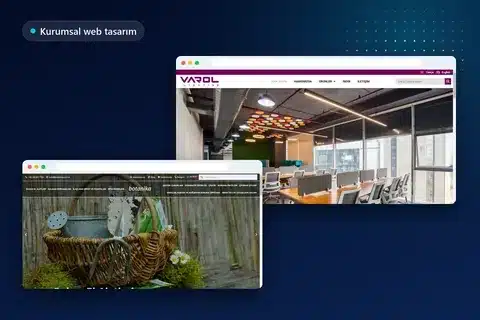
The Pendik-based LED lighting manufacturer’s website publishes Turkish and English versions at separate addresses with Polylang and connects pages through hreflang tags. Product pages provide codes, power, dimensions, color temperature, CRI and IP ratings in tables; PDF catalogs appear on the download page and the export email address on the contact page. Details are explained on the Varol Lighting reference page.
Akkason Hi-Fi Mobilya
The website for the Kağıthane workshop manufacturing audio racks, speaker stands and similar products for sound systems is a series-based catalog without prices. Series pages give technical information such as recommended maximum loads and materials; the Download Catalog link, custom design page and map showing the showroom address work together. The project can be reviewed on the Akkason reference page.
The lesson for factory website design from all three projects is the same: product names and codes must match the printed catalog exactly, technical values must be entered as text rather than images, and every catalog product must also appear on the website. A common approach is to add a few product photographs to a ready-made corporate theme; this leaves technical tables empty, sends the quotation button to a general contact form and forces buyers to search PDFs for the data they need.
How much does factory website design cost, and how does the process work?
A factory website structured as a catalog without prices is prepared within the corporate website package from 15,000 TL; structures with carts and online payment start at 24,000 TL under the e-commerce package. Extras such as multiple languages, high product counts and custom quotation processes are priced according to scope and clarified in the proposal.
| Item | Price |
|---|---|
| Single-page promotion (e.g., a trade show or one product group) | From 12,000 TL |
| Corporate website and product catalog without prices | From 15,000 TL |
| E-commerce website (cart and payment) | From 24,000 TL |
| Multiple languages, product count, filters, quotation form structure | According to scope, clarified in the proposal |
| Optional monthly maintenance | 500–2,000 TL/month |
A corporate website with ready content and no additional languages is completed in an average of 5–7 business days. For projects containing catalogs and language versions, the schedule is determined once product count and translation delivery are clarified; requirements can be organized beforehand using the website brief form. The steps are, in order, preliminary discussion, catalog data collection, mobile-first design, WordPress setup and product entry, search foundations, testing and launch.
The general scope of a promotional structure appears on the corporate web design page, while packages are compared on the web design prices page. After launch, visibility for product groups in organic searches is SEO work, while immediate visibility for specific product keywords is the role of Google advertising management; SEO starts at 9,000 TL per month and Google Ads management separately at 9,000 TL per month, with the advertising budget paid directly to Google.
Let us build the digital catalog for your production together
Questions from manufacturers seeking information are answered, existing websites and catalogs are reviewed for companies considering a decision, and companies ready to begin receive a proposal the same day. The first topic is how product data will be organized.
How website structure changes across other industries is explained together on the industry-specific website design page.
For manufacturers wishing to go beyond a catalog and receive online orders from dealers, the building a B2B website article provides a detailed roadmap.
Frequently asked questions
How much does a factory website cost?
A factory website containing a product catalog without prices starts at 15,000 TL within the corporate package; a structure with a cart and online payment starts at 24,000 TL under the e-commerce package. Extras such as multiple languages, product count and quotation form structure are priced in the proposal after reviewing scope.
Should a manufacturing company's website display prices?
For products whose prices vary by capacity, options or quantity, the website is built as a catalog without prices and prices are provided through quotations. For standard products sold from stock, priced sales or a mixed structure with main products quoted and spare parts purchased through a cart can be preferred.
Which fields should a quotation request form contain?
Company name, contact person, country, product code, quantity, delivery terms and description are the basic fields; a file upload field for technical drawings can also be added. Having the product page button open the form with the relevant product code filled in speeds up responses.
Can CE marking or a TSE logo be used on the website?
Only if the company actually holds that marking or certificate, and only for products within its scope. The CE Marking Regulation states that the mark may be used only on products required by technical regulations; TSE’s trademark usage procedure also prohibits creating the impression on websites that products outside the certificate scope are certified.
How many languages are needed for an export website?
The number of languages is determined by current and target sales markets. Each language is published at a separate address with fully translated main content and declared through hreflang; fewer complete languages are preferred over adding a language that cannot be kept current.
Is an automatic translation plugin sufficient for an export website?
Automatic translation within the browser helps users understand a page but is not indexed by Google as a separate language version. To appear in foreign language searches, translated product pages must be published at separate addresses.
Is a PDF catalog sufficient, or are product pages needed too?
A PDF catalog is useful for buyers wanting to download and share it with their team, but information available only inside PDFs is difficult to find in searches. Products in the catalog must also appear on the website with technical data presented as text.
How long does factory website design take?
A corporate website with ready content and no additional languages launches in an average of 5–7 business days. For projects with extensive catalogs and language versions, the schedule is agreed after clarifying product count and translation delivery dates.

Call us
Call us for detailed information.
Let us call you!
Share your number and let us call you!