In brief: When choosing a website development company, the deciding factors are its live projects, how fully its process is documented, its platform and who will own the website after delivery. Verify portfolios through live websites, note communication quality in the first meeting and compare candidates using a scorecard. The contract must clearly specify domain, hosting, license and content ownership as well as who handles maintenance after delivery.
The deciding factors when choosing a website development company are its live projects, how fully its process is documented, its platform and who will own the website after delivery. A visually appealing portfolio alone is insufficient; how websites delivered by the same company work today, whose name the domain is registered in and who handles updates matter at least as much as design.
This guide turns company selection into a step-by-step evaluation process. It first covers documenting requirements, verifying portfolios through live websites, assessing communication quality in the first meeting and questioning the technical approach. Later sections provide a scorecard to compare candidates side by side, contract and handover clauses, warning signs and common mistakes.
What steps are involved in choosing a website development company?
Choosing a website development company involves more than sorting a few proposals by price; it is an evaluation from defining requirements through signing the contract. The following sequence ensures the decision rests on evidence rather than impressions:
- Put requirements into a brief project summary.
- Examine candidate companies’ portfolios through live websites.
- Note questions asked and answers given in the first meeting.
- Question the approach to platforms, speed and search engines.
- Compare proposals against the same item list.
- Read ownership, handover and support clauses in the contract.
It is normal to eliminate some candidates after each step. When a few companies remain at the end, the scorecard below makes it easier to decide with reasons. Brief notes taken at every stage also make it possible to explain afterward why the decision went this way.
Document requirements first: A brief project summary
A brief project summary prepared before searching for a company is the first step toward comparable proposals. When the same summary is sent to all candidates, each company answers the same question. Proposals obtained without a summary cannot be placed side by side because each company prepares them based on its own assumptions.
The summary should include the website’s purpose (promotion, quote requests, appointments or sales), target visitors, an estimated page list, number of languages, desired custom functions, whether content is ready, example websites you like and the target launch date. Sharing a budget range is also useful; companies clearly stating what is possible within it prevents unnecessarily long meetings. A short summary is fine; what matters is every candidate working with the same information.
Another benefit of the summary is clarifying the business’s own priorities. Distinguishing essential features from those that can be added later allows company suggestions to be weighed against these priorities. Otherwise, each meeting adds a new idea and the scope grows unnoticed. Keeping the essential list short also focuses the budget on what is actually needed for the first launch.
How is a portfolio verified? Testing live websites
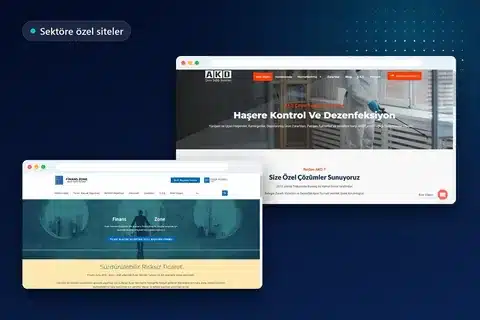
A portfolio is verified through live websites rather than screenshots. A good website development company should be able to share the addresses of the work it presents; opening these websites and performing a few simple checks reveals far more about workmanship than design alone:
- Open on a phone: Do menus, buttons and forms work smoothly on mobile, and is text readable without zooming?
- Measure speed: Entering the address in Google’s PageSpeed Insights tool reports the page’s mobile and desktop performance.
- Secure connection: Does the address open with HTTPS and does the browser show the connection as secure?
- Test the form: Does a confirmation message appear when the contact form is submitted?
- Current status: Is the website still live, and are its copyright year and contact details current?
The purpose of these checks is not to seek a perfect score; some websites may have been changed by the businesses’ own teams after delivery. What matters is whether a level of care is visible across the work overall. Projects completed by Onur Freelance are also listed on the references page with links to live websites; the same checks can be applied to them.
You can also ask whether the company was responsible for all of a portfolio project. In some projects, it may have handled only design while content or software was prepared by another team; knowing who did which part allows the portfolio to be interpreted correctly. The answer also shows how transparently the company describes its own work.
How important are industry experience and similar projects?
Work in a similar industry shows that the company knows that field’s expectations, but is not decisive on its own. Clear, trustworthy communication takes priority for a law office, fast quotation requests for a moving company, and a product catalog for a manufacturer; whether the company sees these differences becomes clear in the first meeting. In fields with strict promotional rules, such as healthcare and law, awareness of these restrictions is additionally important.
A company without industry experience can also reach the right result with a good process. In that case, examine how many questions it asks to understand the business, its customers and competitors. A candidate quoting without asking any questions may tend to fit the project into a ready-made mold even if it knows the industry. For businesses addressing local customers, the company’s knowledge of Google Business Profile and local search can also be questioned; however, these activities are usually planned as a service separate from website development.
How is communication quality assessed in the first meeting?
Communication quality is measured starting with the speed and substance of the first reply. A website development company that answers questions directly, researches unfamiliar topics before returning and summarizes discussions in writing tends to maintain the same order throughout the project. A meeting with a generic presentation but no business-specific questions suggests future communication will also be one-way.
Who will run the project should also be clarified in the meeting. If the salesperson and designer are different people, requesting a brief meeting with the person actually doing the work is reasonable. How freelance designers, small studios and agencies differ in communication and continuity is discussed separately in the article comparing a freelance web designer and an agency .
How communication will work during the project should also be discussed in the first meeting: through which channel will approvals be given, how often will interim outputs be shared, and where will design drafts be reviewed? A web design company answering these questions clearly prevents uncertainty about “what stage are we at” halfway through the process.
Page contents

Technical approach: Platform, speed and search engine foundations
A website development company’s technical approach determines how easily the website can be managed over the years. The first question is which platform will be used: a widespread open-source content management system, company-specific closed software or a website builder with a monthly subscription? Closed systems make changing companies harder, while another developer can take over a website on an open and widespread platform. The advantages and disadvantages of these options are covered in the guide comparing WordPress and website builders .
Search engine foundations are also part of the technical approach. Basic practices in Google’s SEO starter guide include titles reflecting the topic, meaningful address structure and alternative text for images; the guide also states that Google Search does not use the keywords meta tag. Ask whether these foundations will be implemented during setup; comprehensive SEO work may be a separate service, but correct titles, addresses and a sitemap are necessary from the website’s first day.
Ask for the company’s recommendation on hosting and security together with its reasoning. Which hosting package is chosen and why, how many days of backup history are retained, how administrator login will be protected and who is responsible for updates require clear answers. A candidate able to describe a concrete plan rather than a general “we will handle it” presents a more trustworthy technical picture.
Let us prepare the project summary together
Before starting company meetings, let us clarify the page list, functions and schedule together in a free preliminary assessment. The resulting summary can be used not only for our proposal but also for comparison with other candidates; the written proposal arrives the same day with a scope summary.
A scorecard for comparing candidates
When a few candidates remain, a simple scorecard can tie impressions to the same criteria. Give each criterion a score from 1 to 5, increasing the weight of those more important to the business. A business updating content frequently may prioritize technical approach and support after delivery; for a short-lived campaign website, portfolio and speed are more decisive:
| Criterion | What is examined? | Strong signal |
|---|---|---|
| Portfolio | Live websites, mobile appearance and speed measurement | Most websites are live and carefully built |
| Communication | Speed of the first reply, questions asked | Business-specific questions, written summary |
| Technical approach | Platform, SEO foundations, security | Open platform, clear update plan |
| Proposal clarity | Item list, included and excluded work | Every item on a separate line |
| Ownership | Domain, hosting, licenses | All accounts in the business’s name |
| After delivery | Support period, maintenance options | Written scope and response time |
The table does not replace the decision, but makes its reasoning visible. If the website development company with the highest total score differs from the lowest-priced company, it becomes clear which criterion causes the difference. How to read proposals item by item is explained in detail in the corporate web design prices guide.
Contract and ownership: Domain, hosting, licenses and content
The most critical contract clause is who will own the website and its associated accounts. The domain registrant, hosting account owner, whose name paid theme and plugin licenses are purchased in, and usage rights to website content (text, visuals, design files) should be established in writing. If these items are unclear, problems arise when the relationship ends and the website needs moving to another company.
The platform’s license is also part of ownership. WordPress is open-source software distributed under the GPLv2 (or later) license ; no license fee is paid for the software itself, and the website can be moved to another server or developer. In a closed system, ask before signing whether the website can be exported and, if so, in which format it will be delivered.
The contract should also include the payment plan, revision rights, delivery date and procedure in case of delay. Milestone-based payments, divided according to steps such as design approval, launch and handover, balance the risk for both parties. Who retains usage rights to project-specific code and design drafts should also be explicitly stated in the same document.

What information should be handed over at delivery?
Delivery is complete when the business has the information needed to manage the website independently, rather than simply when it goes live. The following information and files are expected to be provided to the business at delivery:
- Access credentials for the domain registration account and hosting dashboard.
- An administrator account for WordPress or the system used.
- License keys and license accounts for paid themes and plugins.
- A current full website backup and a brief note on how to restore it.
- Management information for corporate email accounts.
- Owner permissions granted to the business in Google Search Console and Analytics properties.
- Training or brief instructions for using the dashboard.
Sharing this list at the proposal stage and asking whether everything will be provided at delivery prevents later access issues from the start. At Onur Freelance, domain and hosting accounts are already opened in the business’s name and dashboard training is part of delivery, so this handover is a normal step in the process.
Support after delivery: Who handles maintenance and what is the response time?
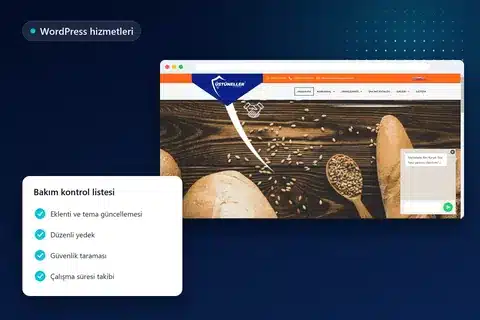
Support after delivery is the most frequently neglected aspect of company selection, yet its impact lasts longest. On a WordPress website, vulnerabilities accumulate when core, theme and plugin updates are not performed regularly; without backups, a single faulty update can become data loss. Which tasks the company performs free or for a fee after delivery, and how quickly it responds to an urgent breakdown, should be documented.
Maintenance can be obtained as a subscription or planned per task when needed. At Onur Freelance, monthly maintenance is optional; fees range from 500 TL up to 2,000 TL, based on website size and expected support frequency. How updates, backups and security checks are handled is explained separately on the WordPress maintenance and update service page.
When defining response times, distinguish emergencies from routine requests. A website not opening at all or a contact form not working counts as urgent; updating text or an image is a routine request. Including this distinction in the contract aligns both parties’ expectations.
Warning signs: When should you look for another candidate?
Some signs require looking for another candidate however attractive the price may be. When encountering the following situations, postponing the decision and asking for more information is the right approach:
- Addresses of portfolio projects are not shared, or most websites are no longer live.
- First place on Google or a particular visitor count is promised.
- The domain and hosting account will be registered in the company’s name.
- The proposal consists of a single total figure without itemization.
- A written contract is not proposed or is considered unnecessary.
- The website is built on a closed system and no clear answer is given about exporting.
Ranking promises require particular attention. Google’s guide to what to consider when hiring SEO services recommends looking for someone else when a provider promises first place; the same principle applies when evaluating a website development company.
Common mistakes when choosing a company
Looking only at design: Liking the portfolio visuals does not mean the websites are fast, secure and manageable. The correct method evaluates visual appeal together with live website checks. An impressive homepage animation matters less than readable service pages and easy contact steps.
Deciding from a single proposal: A decision without comparison makes it impossible to judge whether the price and scope are reasonable. Obtaining proposals from several web design companies using the same project summary also reveals scope differences in the market.
Relying on a verbal agreement: If everything discussed is not documented, topics such as revision count or support after delivery create disputes later. Requesting a brief written summary after meetings removes this risk.
Underestimating content preparation: One of the most common causes of project delays is text and visuals not being prepared on time. If they arrive on time, 5-7 business days is an average delivery range for a standard corporate project; if content is awaited, the schedule extends with it.
Rushing the decision: Signing with the first company because launch is approaching causes evaluation steps to be skipped. If time is tight, dividing scope into stages and launching the essential pages first is safer than compromising on company selection.
How does Onur Freelance work in this process?
Onur Freelance is a studio working from its Gülsuyu office in Maltepe, İstanbul, combining web design and digital marketing, and its founder’s experience in the field exceeds 8 years. The process starts with a free preliminary assessment; once requirements are clear, a written proposal is shared the same day. Starting prices are 12,000 TL (one-page promotional website), 15,000 TL (corporate website) and 24,000 TL (e-commerce), respectively.
Meetings take place with the team actually doing the work, without an intermediary representative. Businesses in İstanbul meet at the office or online; projects in other cities and abroad proceed entirely remotely. Websites are delivered mobile compatible, with SSL and basic search engine infrastructure in place. Every check in this guide also applies to Onur Freelance; its portfolio, proposal and contract can be examined using the same criteria.
Let us evaluate candidates with evidence
To discuss portfolios, processes and contract clauses while searching for a website development company, simply message or call between 09:00 and 21:00. The preliminary assessment is free; we can also meet in person at the Maltepe office if preferred.
The full list of questions to ask a company in the meeting and the criteria for a good answer appear in the guide to 10 questions to ask when commissioning a website .
What does a selection mistake cost later? Real cases
Unlicensed themes, accounts not opened in the business’s name or unsupported infrastructure may make rebuilding the website necessary.
Industrial hygiene equipment manufacturer: A website that could not be edited because of unlicensed themes and plugins was rebuilt with Elementor, and 96 product pages were rewritten with original text.
Scrap metal company: The old website, which did not work on the server, was moved to WordPress with its design preserved, and old addresses were connected to new pages with 301 redirects.
Sign manufacturer: Only 19% of the 16,300 addresses known to Google were indexed; automated links generating meaningless addresses were removed.
Frequently asked questions
What should you examine first when choosing a website development company?
First examine the company’s live work; open portfolio websites on a phone and check speed, forms and secure connections. Then evaluate communication quality, technical approach and contract clauses.
Is choosing the cheapest company the right decision?
Price should not be the sole decision criterion; the lowest proposal may exclude work included by other candidates. When candidates quote from the same project summary, it becomes clear which proposal actually offers value.
Whose name should the domain and hosting be registered in?
The business itself should appear as the registrant on both accounts and hold the login information. Accounts opened in the company’s name make moving the website harder when the working relationship ends.
Can the website be moved if you want to change companies?
If the website is built on an open-source platform and accounts are in the business’s name, it can be moved to another company. For closed systems, export capabilities should be discussed before signing the contract.
Is a contract necessary when commissioning a website?
Yes, a written contract covering scope, payment plan, revision rights, delivery date and ownership clauses is necessary. Verbal agreements can lead to disputes on issues such as support after delivery.
Does a slow portfolio website mean the company is bad?
One slow website is not a definitive sign, because businesses may have changed websites after delivery. If the same problem appears across several projects, ask the company about it.
What information should be requested at delivery?
Request domain and hosting access, an administrator account, theme and plugin licenses, a current backup and owner permissions in Search Console and Analytics. Dashboard training should also be part of delivery.
Should you work with a company offering ranking guarantees?
No; since no company controls positions on Google, promising a particular ranking is unrealistic. Google’s guide to choosing SEO services also recommends avoiding anyone promising first place.

Call us
Call us for detailed information.
Let us call you!
Share your phone number and let us call you!
Our other services
- › Corporate web design
- › E-commerce website development
- › SEO optimization
- › WordPress website development
- › Google Ads management
- › WordPress speed optimization
Service areas
- › Web design in Sakarya
- › Web design in Tekirdağ
- › Web design in Bursa
- › Web design in Beşiktaş
- › Web design in Şişli
- › Web design in Tuzla
- › Web design in Ümraniye
- › Web design in Kadıköy
- › Web design in İstanbul
- › Web design in Ankara
- › Web design in Ataşehir
- › Web design in Üsküdar
- › Web design in Kartal
- › Web design in Maltepe
- › Web design in Pendik
- › Web design in Kocaeli
- › Web design in İzmir
- › Web design in Antalya